
When people search for rehab centers, they are rarely just looking for a definition. They are usually trying to understand what actually happens inside treatment and whether it feels like something they or someone they care about can realistically step into.
There is often a mix of urgency and uncertainty behind that search. Questions come up quickly. What does a typical day look like? How strict is the environment? Will it feel supportive or overwhelming?
Modern rehab centers are designed to answer those concerns with structure, consistency, and practical support that helps people rebuild life step by step.
What Today’s Rehab Centers Focus On
Rehab centers are no longer built around a one-size-fits-all model. Most programs today are structured around the idea that recovery is personal.
People arrive with different backgrounds, different triggers, and different levels of support outside of treatment.
Because of that, rehab centers typically focus on three core areas:
- Stabilization and safety
- Emotional and psychological support
- Life skills for long-term recovery
The goal is not just short-term change. It is helping individuals create habits and tools that can actually hold up once they leave treatment.
Why Structure Matters So Much in Rehab Centers
One of the first things people notice in rehab centers is structure. Days are scheduled. Activities are planned. There is a rhythm to everything from morning check-ins to evening reflection.
That structure is intentional.
Many people entering treatment come from periods where daily life felt unpredictable or unbalanced. Having a clear routine helps reduce stress and removes the pressure of constantly making decisions in early recovery.
Over time, that structure becomes grounding. It creates a sense of stability that allows other parts of recovery to develop more naturally.
A Closer Look at What a Day Can Feel Like
While every program is slightly different, many rehab centers follow a similar daily flow that blends therapy, education, and downtime.
A typical day may include:
Morning grounding or check-ins
The day often starts with reflection or a group check-in. This helps set a tone for the day and encourages awareness of emotional and mental state.
Individual and group therapy
Therapy is a core part of most rehab centers. One-on-one sessions focus on personal history and challenges, while group sessions provide shared perspective and connection.
Skill-building sessions
Many programs include practical education focused on coping skills, stress management, and relapse prevention strategies.
Breaks and routine meals
Even simple routines like eating at regular times or taking scheduled breaks are part of rebuilding stability.
Wellness or reflective activities
Depending on the program, this may include light exercise, mindfulness work, journaling, or creative expression.
Evening wrap-up
Days often end with reflection or group processing, helping individuals acknowledge progress and prepare for the next day.
This structure is not meant to feel restrictive. It is meant to remove chaos and replace it with predictability during a period of change.
The Role of Support Inside Rehab Centers
Support in rehab centers does not come from one place. It is built into the environment.
Staff support is one layer. Counselors, therapists, and medical professionals help guide the process and respond to individual needs.
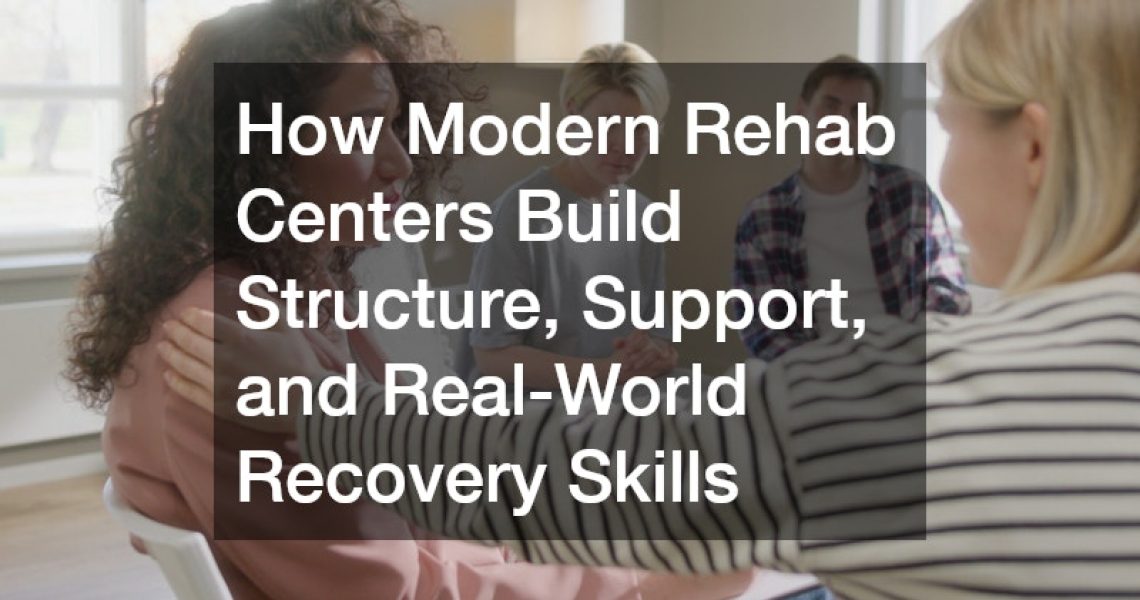
Peer support is another layer. Being surrounded by others who are also working through recovery can reduce isolation and help people feel understood without needing to explain everything.
Even the structure itself becomes a form of support. When someone does not have to constantly figure out what comes next, they have more space to focus on recovery.
Real-World Skills That Rehab Centers Try to Build
Modern rehab centers are not only focused on the time someone spends in treatment. A large part of the work is preparing for life afterward.
That preparation often includes:
- Identifying personal triggers and stress patterns
- Building healthy coping strategies
- Learning communication skills for relationships
- Creating daily routines that support stability
- Developing relapse prevention plans
These are practical skills that connect directly to everyday life. The goal is to help individuals feel more capable once they transition out of a structured environment.
Why Connection Matters as Much as Treatment
One of the most overlooked parts of rehab centers is the role of connection.
Many individuals arrive feeling disconnected, not only from others but also from themselves. Treatment creates space to rebuild that connection slowly.
Group settings help normalize experiences. One-on-one sessions create space for honesty. Daily interactions build trust over time.
This sense of connection often becomes one of the most important parts of recovery, long after treatment ends.
Moving Through Treatment at a Human Pace
Recovery inside rehab centers is not about rushing progress. It is about consistency.
Some days feel productive. Others feel more difficult or reflective. Both are part of the process.
Good programs understand this and allow space for it. The focus is not perfection. The focus is steady movement forward, even in small steps.
A Clearer Picture of Rehab Centers Today
For many people, the idea of rehab centers can feel unfamiliar at first. But when you look at the daily structure, the support systems, and the focus on real-life skills, the picture becomes more grounded.
These are environments built to help people stabilize, reflect, and rebuild in a way that feels manageable rather than overwhelming.
A Step Toward Stability and Support
Rehab centers are not just places where treatment happens. They are structured environments where people begin rebuilding routines, confidence, and direction with consistent support around them.
For anyone considering this step, it often starts with simply learning more. Understanding what daily life looks like can make the process feel less intimidating and more human.
Recovery is not a single decision. It is a series of supported steps. And rehab centers are designed to help make those steps feel possible.